
The Path That Began with a Neapolitan Jacket
In Conversation with Maestro Sunghyun Yoo
Published on 20 July 2026
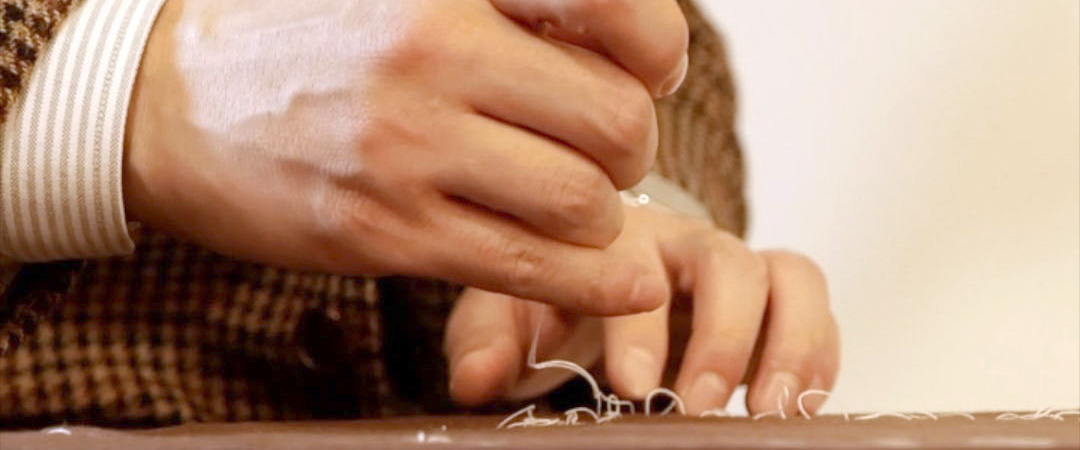
Sartoria Del Signore is an independent bespoke tailoring atelier located in the historic heart of Naples, near the Royal Palace.
Since 2026, Sartoria Del Signore has been registered as an impresa artigiana in Italy’s Albo Imprese Artigiane. This is a protective system established to preserve Italy’s proud culture of craftsmanship amid industrialisation and mass production. In Naples, this system helps carry forward the tailoring skills handed down by generations of artisans, together with their spirit and values.
Q. How did your journey into tailoring begin?
Maestro Yoo: I loved dressing from an early age. At a certain point, I could no longer find the clothes I wanted to wear, so I began making them myself. From 2008 onwards, I devoted myself to making clothes, working for around eight years as a designer for fashion labels in Seoul that presented collections.
During that time, I worked as both a fashion designer and a pattern maker. I continued my research, thinking deeply about the beauty of clothing that reveals a person’s natural self. I also trained myself in pursuit of that ideal.
As I grew older, my understanding of the “lasting style and beauty” I wanted to continue pursuing began to change. People often go through life without realising how the air about them changes as they age. Perhaps it was inevitable that I would step away from the fashion industry, which constantly demands the pursuit of novelty, and enter the world of classic tailoring, which is rooted in enduring beauty.
For me, tailoring is a way of revealing, over time, a person’s unique air and the beauty that deepens with age. For this reason, I chose the path of becoming a bespoke tailor.
Q. What drew you to Naples?
Maestro Yoo: After discovering classic tailoring and its enduring beauty, I began seeking out highly skilled tailoring artisans nearby. Because such craftsmen rarely draw attention to themselves, I had to seek out their hidden ateliers in person. At first, I thought of French haute couture houses as places where I could learn the craft at the highest level. But I came to understand that classic tailoring was the haute couture of menswear.
Then one day, at the atelier of an artisan, I happened to meet a gentleman wearing a Neapolitan jacket. He carried himself with both suppleness and dignity, and I immediately realised that his aura came from the jacket. It may sound like a scene from a film, but on the day I encountered that jacket, I decided that I had to go to Naples.
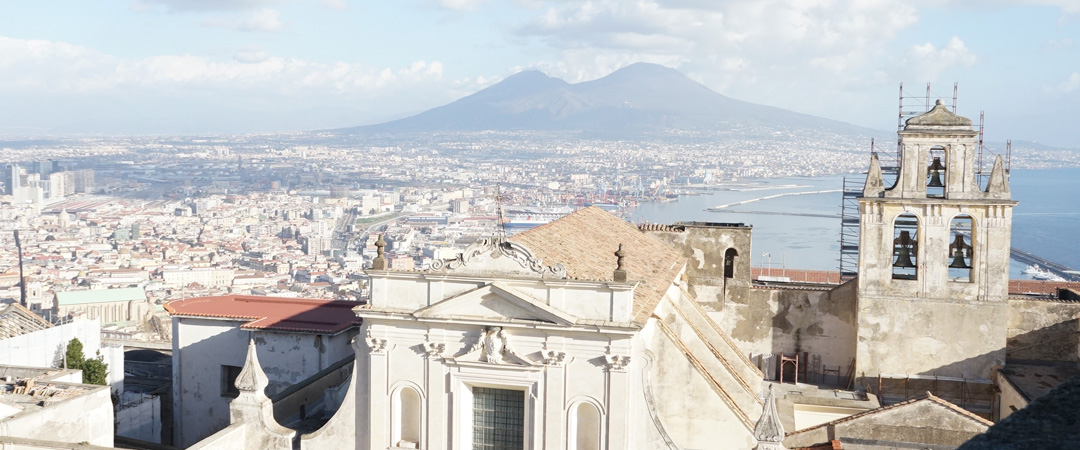
Q. What were your early days in Naples like?
Maestro Yoo: At first, I knew nothing about Naples except that it was the city where the most beautiful jackets I had ever seen were made. Even now, it is difficult to put into words the conviction I felt at the time. When people asked whether I had ever been to Naples, I would answer, “I have seen a Neapolitan jacket.”
Moving to a city simply because of a single jacket may still sound foolish. But I wanted to know what kind of craftsman, from what kind of culture and background, could make such a garment. I wanted to understand not only the technique but also the environment in which such clothing was born. Nothing else mattered to me.
For that reason, just as I entered the world of classic tailoring, I took the bold step of uprooting my entire life and moving to Naples. That decision brought considerable hardship in the beginning. The hardest part was the language. The older maestros, in particular, spoke in a strong Neapolitan dialect.
Q. How did your apprenticeship in a Neapolitan atelier begin?
Maestro Yoo: After arriving in Naples, I searched for a maestro who could create a jacket like the one I had seen. A friend advised me that opportunities would not come easily to a foreigner and that I should begin by looking for places where I would be more likely to be given a chance. But I had firm standards of my own regarding the person from whom I wished to learn.
I carried with me a letter that I had written in imperfect but carefully composed Italian and went to visit the maestro I had in mind. It was a bright summer Saturday. The silver-haired maestro listened attentively to the very end as I, a young man from the other side of the world, read my letter aloud. As I read, I too was deciding whether he was the maestro to whom I could devote my time and my whole heart. I decided that I had to become his apprentice.
That day, the Neapolitan maestro recognised the sincerity in my letter and the earnestness in my eyes. That was where my true journey began.
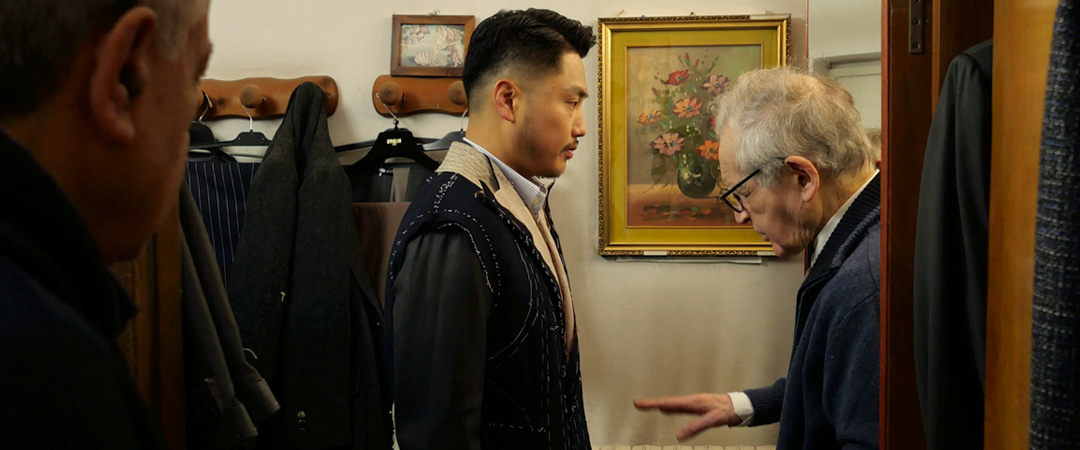
Q. What shaped your journey from apprentice to maestro?
Maestro Yoo: I began as a trouser maker at the first atelier where I trained. After completing my training in trouser making, I focused on jacket making and naturally progressed to learning coat making. I then became independent as a maestro in 2022.
Three maestros were particularly important to me. Because the owners of family-run ateliers tend to be reluctant to pass their techniques on to outsiders, the process of learning was not easy. My final maestro was a respected artisan who had spent more than fifty years making clothes for Italian gentlemen in one of Naples’s historic ateliers. He guided me through the final stage of becoming a maestro and remains my role model to this day.
Q. What does the word “maestro” mean?
Maestro Yoo: A maestro is someone who can carry out every stage of making a garment from start to finish. He must be able not only to cut but also to sew, and he must be capable of making all types of classic garments, including jackets, coats and trousers. This is what allows someone to be called not simply a sarto, but a maestro.
Neapolitan tailoring has long been structured around a division of labour between makers of upper garments, including jackets and coats, and makers of trousers. As a result, the number of artisans specialising in trouser making has declined rapidly in recent years. Many tailoring houses still work with separate trouser makers. I, however, make jackets, coats and trousers myself so that I can achieve a balance between the upper and lower garments through a single vision.
It goes without saying that a maestro must be able to make clothes well. He must also be able to create a garment that is both beautiful and harmonious, and that suits the individual for whom it is made. The ability to run an atelier, a gentlemanly attitude towards clients and a philosophy of one’s own are also important qualities of a maestro.
For these reasons, there are many people today who are called tailors, but few who are called maestros.
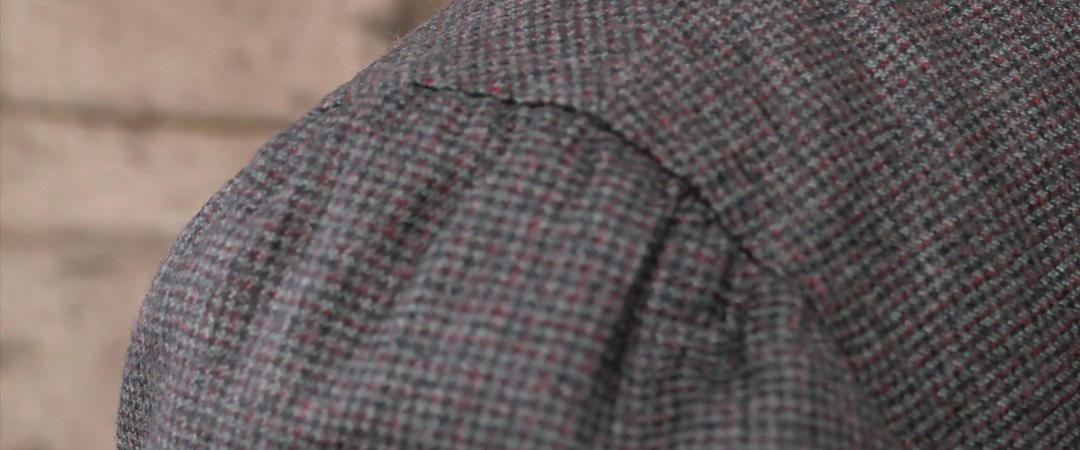
Q. What defines the house style of Sartoria Del Signore?
Maestro Yoo: The name Del Signore means both “of the gentleman” and “of the Lord”. It is a name I have carried in my heart for a long time.
The purpose of Sartoria Del Signore is not to make a person appear to be someone other than who they truly are. Rather, through Sartoria Del Signore’s own Neapolitan approach, it is to create garments with sincerity that reveal, in the most beautiful way, the value and distinctive air that the person already possesses.
My house style reflects the same impression as the Neapolitan jacket that captivated me. I seek to create clothes that are dignified yet supremely comfortable, and supple enough to seem as though they flutter when the wearer moves. They appear light yet contain a solid structure, and remain comfortable without ever losing their form.
A mature man appears supple. He looks soft and relaxed, yet dignified at the same time. The lines of the garment fall over the body as though they are flowing. There are no sharp angles in my clothes, so they never appear artificial. The lines of Del Signore make a person look exceptional and strong without any display of force. They remain natural at all times and in every setting.
Q. What does Naples mean to you today?
Maestro Yoo: Naples is steeped in history and culture. Its alleys, which reveal the atmosphere and beauty of different eras, give me artistic inspiration every day.
Naples is also a point of reference for gentlemen who admire classic tailoring. Above all, true gentlemen still live here today. The rich colours that change with every season, the way these gentlemen dress in harmony with those changes, and the way they carry themselves continually teach me. Living in the same city as these men is a great joy.
I live here as one of the few remaining Neapolitan maestros. I arrived as an outsider, but I have ultimately become a person of this land, putting down roots as a successor to Neapolitan tailoring. I do not know where my life will eventually come to rest. But for now, Naples is the place where I live joyfully as a tailor, and the place where I should be.
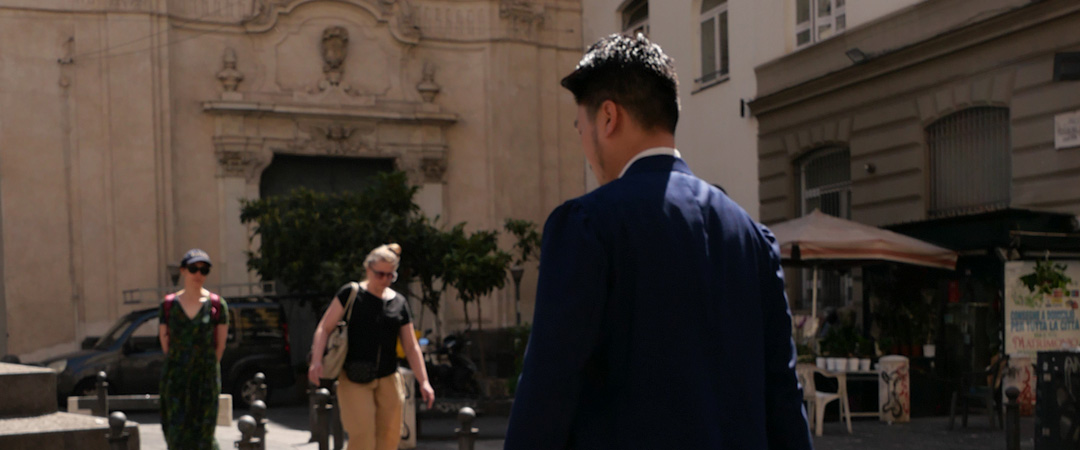
In recent years, true maestros have been gradually disappearing from Naples, while there has been a growing tendency to prioritise productivity through simplified techniques and production processes divided into separate stages for mass production. Even amid this broader trend, Sartoria Del Signore remains committed solely to carrying on traditional methods. By strictly limiting the number of garments made each year, the atelier brings each garment to perfection.
Since 2017, Sunghyun Yoo, a tailor from South Korea, has continued to live and work in Naples rather than return to his homeland. He believes that the tradition of Neapolitan tailoring was born not only from the skills of the hand but also from the culture and way of life of this land. Having received the teachings handed down in the birthplace of Italian tailoring, he now carries on that tradition in his own way as the maestro of Sartoria Del Signore.
– Sartoria Del Signore
Atelier Notes
Q. How is a garment made?
Sartoria Del Signore is a one-man atelier devoted exclusively to bespoke tailoring and run entirely by Maestro Yoo. From taking measurements and drafting the pattern to cutting, fittings, sewing, pressing and final finishing, he personally carries out every stage by hand.
Each garment is completed over the course of two fittings. Because Maestro Yoo personally handles every stage and strictly limits the number of garments produced each year, a garment made at the Naples atelier generally takes around three to six months to complete. Orders placed during trunk shows require an average production time of approximately one year.
Q. How do the trunk shows work?
Maestro Yoo visits New York three times a year and Seoul twice a year to hold trunk shows. Consultations and fittings take place in each city during these visits.
For trunk show clients, the complete bespoke process generally involves four meetings: an initial consultation and measurements, two fittings, and a final appointment for collection. As these stages take place over successive trunk show visits, orders placed at trunk shows typically take around one year to complete.
Trunk show appointments can be arranged in advance through the booking link on the Sartoria Del Signore website or by email.
Q. How are fabrics selected and prices determined?
Sartoria Del Signore selects every fabric according to strict standards. The price of a garment does not vary according to the cost of the fabric; prices differ only according to the type of garment.
What matters most is the discerning eye behind every choice, together with the accumulated expertise, skill and time required to create a garment for one person alone.
© 2026 Sartoria Del Signore